Polycarbonate (PC): Engineering Unmatched Impact Resistance Into Critical Applications
In the event of a component failure in a field setting, the financial implications extend beyond the mere cost of the part itself. The repercussions encompass downtime, liability, and—particularly in the context of safety-critical systems—the potential for harm to individuals. For engineers involved in the specification of materials for enclosures, glazing, machine guards, or structural components, impact resistance is not a mere preference; it is an essential attribute that must be meticulously considered. The property of a design is the primary factor determining its resilience to real-world stresses and its potential for failure analysis.
Polycarbonate (PC) has been recognized as the preferred thermoplastic for this application due to its exceptional level of impact toughness, which surpasses that of other materials, including plastic, glass, and metal, while maintaining a comparable weight and cost.
Why Impact Resistance Comes Down to Molecular Structure
While most engineers are aware of the durability of PC, the underlying reasons for this characteristic are crucial considerations when making material selection decisions.
Polycarbonate’s rigid carbonate linkages are connected by flexible ether groups, thereby conferring the polymer chain with a distinctive blend of stiffness and molecular mobility. In situations involving sudden loads, this structural design enables the PC to absorb and dissipate impact energy through localized chain movement, thereby preventing the propagation of cracks. In contrast to the catastrophic failure of traditional PC, the PC deforms prior to reaching this point of failure. This deformation manifests as a yielding or whitening of the material at the impact zone.
This property distinguishes it from brittle materials such as acrylic (PMMA) or standard glass, which possess minimal capacity for energy absorption and frequently undergo sudden fracture once their stress limit is attained.
How PC Stacks Up Where It Matters
For engineers doing material trade-off studies, a few comparative points are worth having on hand:
- Vs. acrylic (PMMA): PC is roughly 200–300x more impact resistant in standard drop-ball and notched Izod testing, despite similar optical clarity and only a modest weight penalty.
- Vs. glass: PC offers dramatically higher impact energy absorption at a fraction of the weight, which is why it’s the standard for security glazing, riot shields, and machine guarding windows.
- Vs. other engineering plastics (ABS, nylon): PC generally retains impact performance across a wider temperature range, including in low-temperature environments where many plastics become brittle.
Beyond raw toughness, PC also resists repeated impact well — a critical distinction for parts subject to cyclic loading, vibration, or accidental drops over a product’s service life, rather than a single worst-case event.
Where This Translates to Real Applications
Safety and protective equipment Riot shields, safety glasses, face shields, and helmet visors rely on PC’s ability to stop blunt force and projectile impact without shattering into fragments that could injure the wearer.
Machine guarding and industrial enclosures PC is widely specified for machine guards, control panel windows, and equipment enclosures where accidental tool drops, debris impact, or operator contact are ongoing risks on the shop floor.
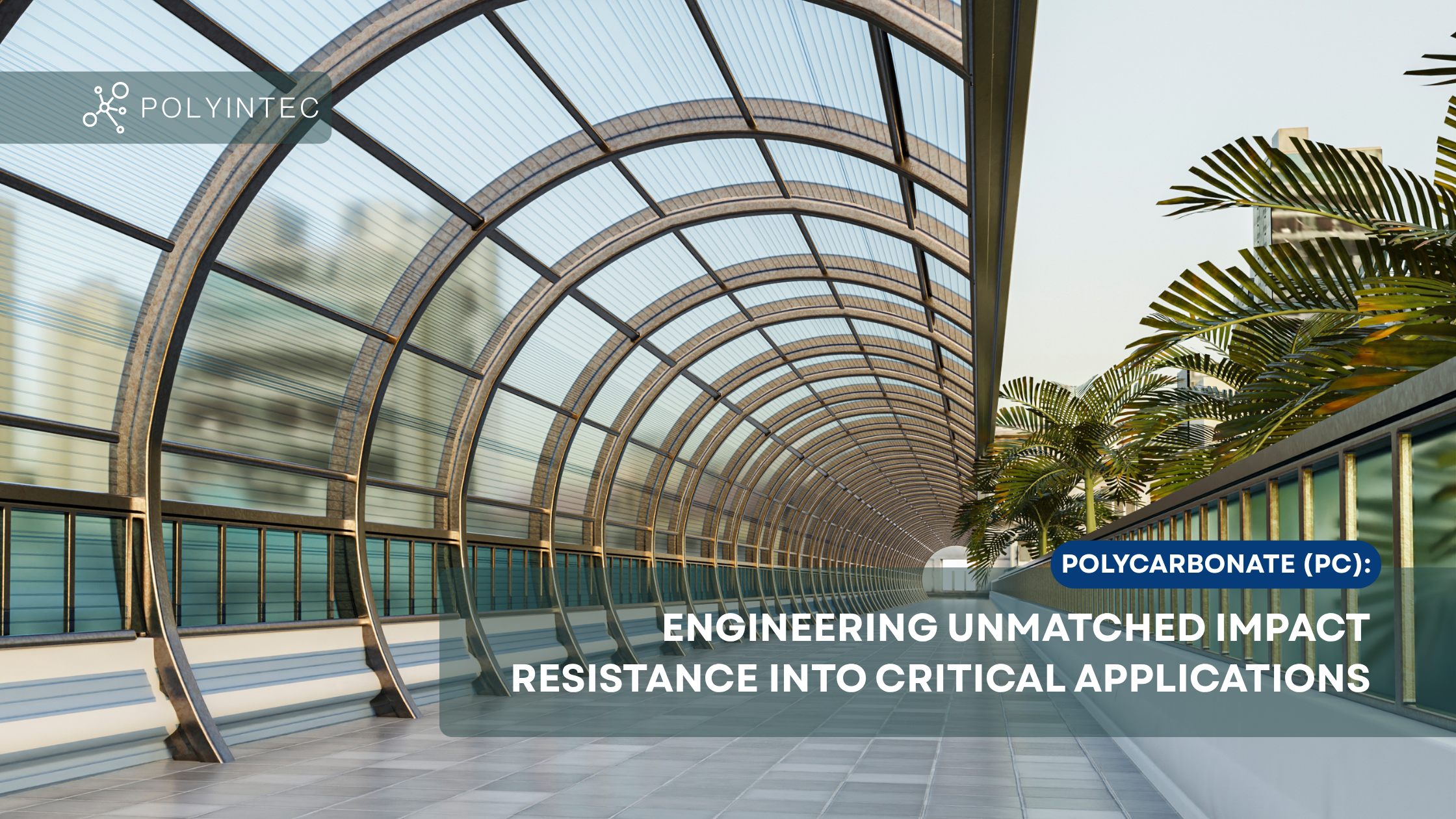
Architectural and security glazing From skylights to bullet-resistant window assemblies, PC’s impact performance allows thinner, lighter panels than glass while meeting stringent safety glazing codes (e.g., ANSI Z97.1, CPSC 16 CFR 1201).
Electronics and appliance housings Laptop shells, power tool housings, and appliance components use PC to survive drops and mechanical stress throughout a product’s life without cracking at fastener points or corners — typically the highest-stress zones in an injection-molded part.
Automotive and transportation components Headlamp lenses, interior trim, and protective covers benefit from PC’s impact durability combined with its ability to be molded into complex geometries.
Design Considerations for Engineers Specifying PC
Impact resistance is a headline property, but getting the most out of PC in a real design means accounting for a few factors:
- Notch sensitivity: PC’s impact performance drops significantly at sharp internal corners. Specify generous radii (typically ≥0.5mm, ideally larger) at stress concentration points.
- Chemical exposure: PC is susceptible to stress cracking from certain solvents, cleaners, and adhesives. Impact performance can degrade if the part is chemically compromised — material compatibility should be checked alongside mechanical specs.
- UV stabilization: For outdoor or high-UV applications, specify UV-stabilized PC grades, as unprotected PC can yellow and lose some toughness over long-term UV exposure.
- Wall thickness and gating: Impact performance is sensitive to processing — proper gate location and consistent wall thickness help avoid weld lines and residual stress that can become failure initiation points.
The Bottom Line for Material Selection
When the design brief calls for parts that need to survive impact — whether that’s a one-time drop event, sustained mechanical abuse, or a safety-critical protective function — polycarbonate consistently delivers a combination of toughness, clarity (where needed), and moldability that’s difficult to replace without giving up something else in the process.
For engineers balancing safety requirements against weight, cost, and manufacturability, PC remains one of the few materials that doesn’t force that trade-off.
Have a specific application or load case you’re evaluating PC against? Our technical team can help you work through grade selection, design considerations, and processing guidelines for your project.