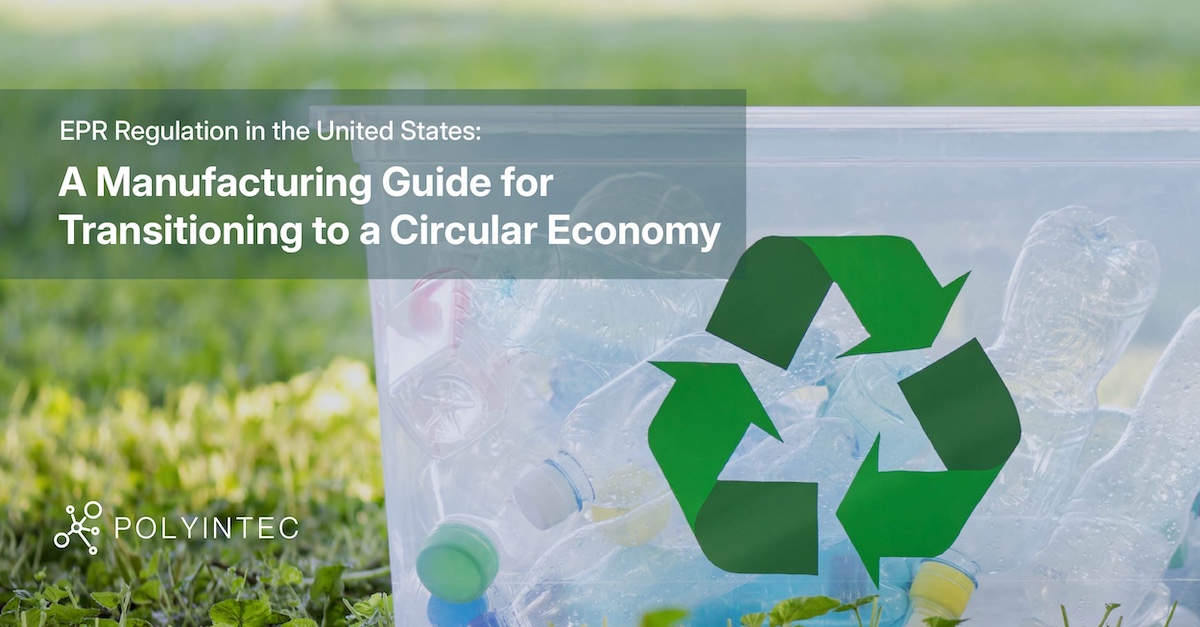
EPR Regulation in the United States: A Manufacturing Guide for Transitioning to a Circular Economy
The packaging regulatory landscape in the United States is undergoing a major transformation. For manufacturing companies that export or operate in the US market, understanding Extended Producer Responsibility (EPR) is no longer just a compliance option, but a crucial strategy for maintaining business profitability and sustainability.
What is EPR Law? Shifting Responsibility Upstream
Extended Producer Responsibility (EPR) is a policy that stipulates that financial and physical responsibility for a product does not end when the product is sold but continues until the end of its useful life (post-consumption).
In the United States, states such as California, Oregon, Colorado, and Maine have established leading legislation mandating that manufacturers fund packaging waste collection and recycling systems. This means that the more difficult your packaging is to recycle, the higher the “environmental tax” or levy you will have to pay to the state.
PET Packaging Design: The Key to Lowering Tax Costs
A distinctive feature of EPR law in the US is the Eco-Modulated Fees system. This system provides incentives in the form of reduced fees for packaging designed according to the principles of Design for Recycling (DfR).
For PET packaging users, optimal design can lead to substantial cost savings in operations.
- Monolayer vs. Multilayer: Single-layer PET is much preferred by recycling facilities (MRFs) in the US over composite materials that are difficult to separate.
- Labels & Adhesives: Using wash-off labels ensures PET bottles are not contaminated during the washing process, thereby increasing the resale value of your material.
- Transparency: Clear PET bottles have a much higher market value than colored ones. In the EPR system, using clear PET can reduce your fee burden.
The Role of rPET in Meeting the 2026 Recycling Quota
The year 2026 will be an important milestone. Many states in the US are beginning to enforce Recycled Content Mandates, which require plastic packaging to contain a minimum percentage of recycled material (PCR).
In this context, rPET (Recycled PET) plays a pivotal role.
- Meeting Legal Quotas: Integrating rPET into your production line now will ensure your company is prepared to meet minimum thresholds that will continue to increase each year.
- Avoiding Penalties: Failure to meet recycled content quotas by 2026 could result in significant fines and distribution barriers in key markets such as California (under SB 54).
- Improving brand image is essential for business success. In the eyes of US consumers who are increasingly concerned about the environment, the use of rPET is tangible proof of a company’s commitment to the circular economy.
Conclusion
The transition to a circular economy through Extended Producer Responsibility (EPR) regulations presents challenges, but it also creates opportunities for innovation. By optimizingpackaging design and integrating high-quality rPET materials, manufacturers not only comply with the law, but also lead the market in resource efficiency.
References
- Sustainable Packaging Coalition (SPC): Design for Recyclability Indicators – Industry standards for sustainable packaging metrics in the US. [sustainablepackaging.org]
- Resource Recycling: EPR State-by-State Policy Tracker – Tracks the latest legislative developments in various US states. [resource-recycling.com]
- The Association of Plastic Recyclers (APR): The APR Design® Guide for Plastics Recyclability – Specific technical guidance for PET packaging design that is compatible with US infrastructure.
- CalRecycle: Plastic Pollution Prevention and Packaging Producer Responsibility Act (SB 54) – Details regarding minimum recycled content regulations in California.