The Science of Clarity: PET as the Gold Standard for Pharmaceutical Packaging in 2026
In the high-risk pharmaceutical industry, packaging is not just a container; it is a critical component of the drug delivery system. Entering 2026, Polyethylene Terephthalate (PET) has cemented its position as the “Gold Standard” for manufacturers worldwide. Industry leaders are adopting PET due to its unique molecular structure.
Chemical Inertia: Maintaining Product Integrity
Pharmaceutical developers prioritize preventing substances from leaching into drugs. PET is chemically inert and non-reactive.
- Zero Toxic Substance Release: PET is composed of carbon, hydrogen, and oxygen, and does not contain BPA or phthalates. This ensures the purity from production to patient use.
- High Chemical Resistance: PET is highly stable against alcohol, oil, and aliphatic hydrocarbons. While it is susceptible to some aromatic solvents such as toluene, its stability is unmatched for most over-the-counter and prescription drugs.
Invisible Shield: The Superior Barrier
Shelf life is a key consideration in the global marketplace. PET serves as a high-performance barrier against oxygen and moisture, the primary factors that compromise drug stability.
- Gas Barrier: PET’s dense molecular structure prevents oxygen and carbon dioxide from migrating through plastic, reducing product oxidation.
- Thermal Stability: With a functional temperature range of -60°C to 130°C, PET maintains its structural integrity during strict cold chain logistics, which is often required for biological products and vaccines.
FDA Compliance: Regulatory Safety Assurance
According to international standards, safety is a legal requirement. PET is regulated and approved by the FDA under Food Contact Substances guidelines.
Using FDA-compliant PET ensures packaging meets the highest safety standards for both solid and liquid preparations, reducing the risk of regulatory issues or product recalls.
Case Study: Logistics Efficiency and Costs
Modern supply chains face ongoing pressure to reduce costs and carbon footprints. Compared to traditional glass, PET offers clear economic advantages.
Comparison: PET vs. Glass (Logistics Perspective)
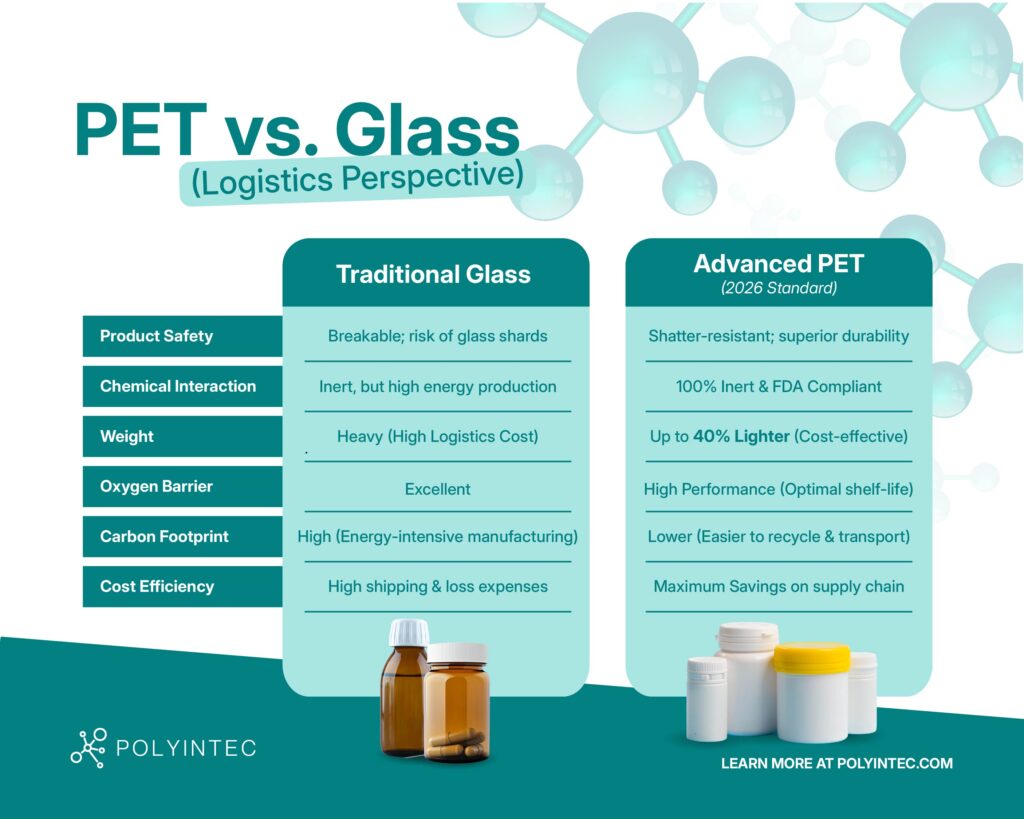
By replacing one million glass packaging units with PET, pharmaceutical distributors can save thousands of liters of fuel annually by reducing cargo weight.
Conclusion
As 2026 approaches, PET demonstrates glass-like transparency combined with the durability and efficiency of advanced polymers. For pharmaceutical companies seeking to optimize packaging, PET provides a clear competitive advantage.
References
- U.S. Food and Drug Administration (FDA) – Guidance for Industry: Container Closure Systems.
- Journal of Applied Polymer Science: Molecular Stability of PET in Medical Applications.