Understanding the Differences Between LDPE, LLDPE, and HDPE: Which One is Right for Your Industry?
Polyethylene (PE) is the most widely used thermoplastic polymer in various industries worldwide. Its flexible, lightweight, chemical-resistant, and easily recyclable properties make it an economical choice.
However, did you know that choosing the wrong type of PE can lead to structural failure or increased production costs? Understanding the specific differences between PE types is crucial for your business efficiency.
The Secret Behind Molecular Structure
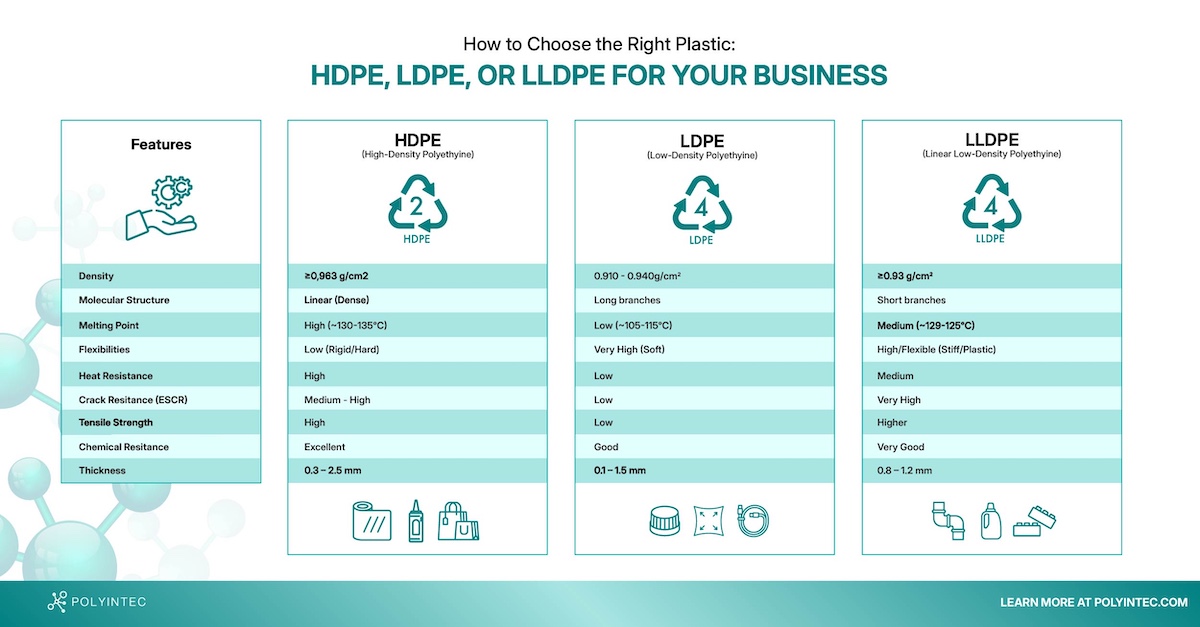
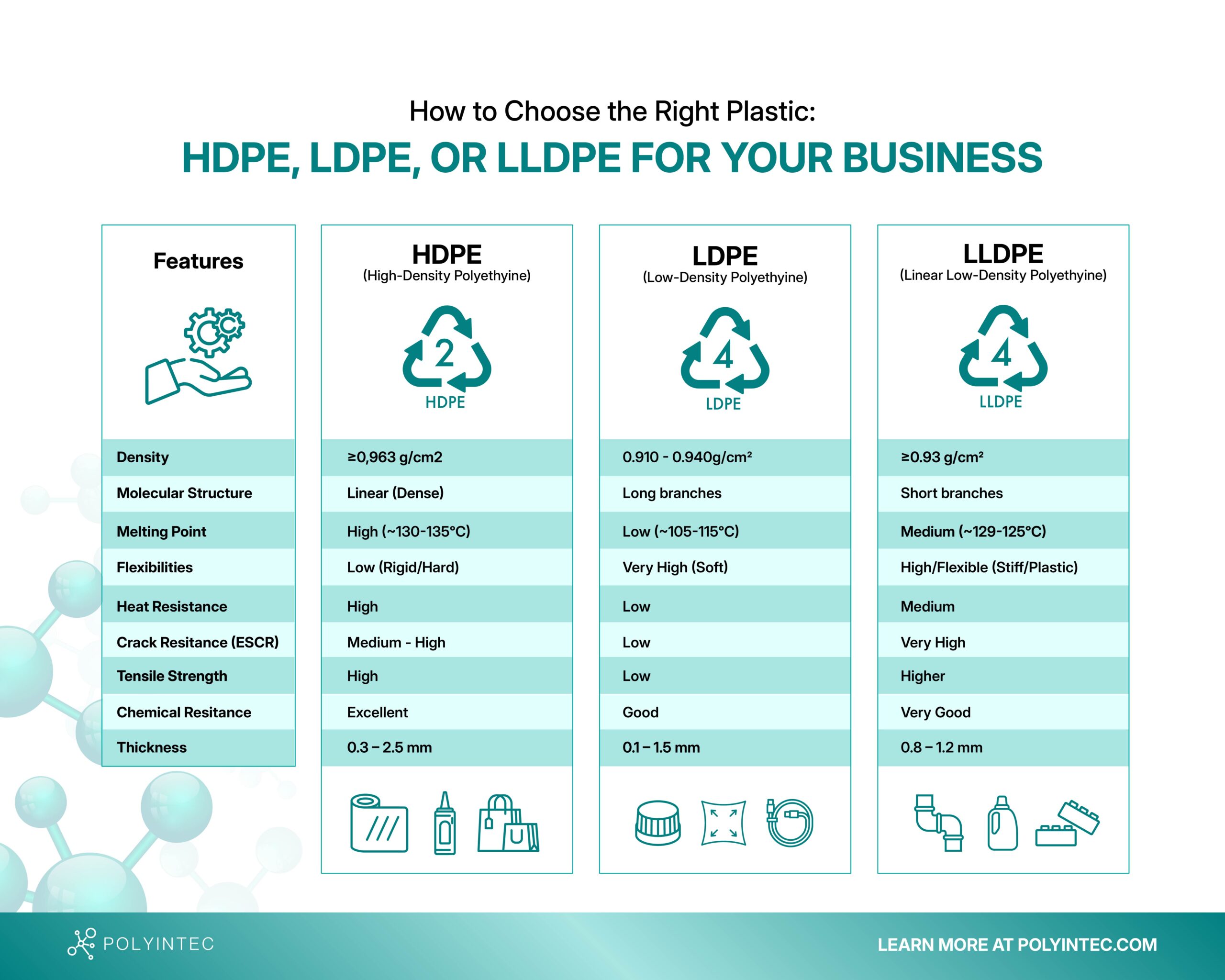
The fundamental difference between these types of polymers lies in the branching of their molecular chains. Simply put, the fewer branches there are, the denser the molecules are, and the stronger the material is.
Polyethylene (PE) is the most widely used thermoplastic polymer in various industries worldwide. Its flexible, lightweight, chemical-resistant, and easily recyclable properties make it an economical choice.
However, did you know that Here is an insightful explanation of the three main types of PE from Polyintec:
1. LDPE (Low-Density Polyethylene)
LDPE has a long molecular chain structure with many branches. This prevents the molecules from forming a tightly packed crystalline structure.
Characteristics: Highly flexible, transparent, and has good impact resistance.
Common Uses: Food wrap (cling wrap), shopping bags, and squeeze bottles.
2. LLDPE (Linear Low-Density Polyethylene)
In contrast to LDPE, LLDPE has a linear structure with uniform short branches.
Characteristics: It has higher tensile strength and better puncture and tear resistance compared to LDPE.
Common Use: Stretch film, flexible bottle caps, and cable covers.
3. HDPE (High-Density Polyethylene)
HDPE has few branches, so its molecular chains can be arranged very closely together.
Characteristics: Very rigid, strong, resistant to high temperatures, and has superior chemical protection.
Common Uses: Detergent bottles, HDPE pipes (used for water pipes), jerry cans, and children’s toys
Conclusion: Choose Wisely for Long-Term Investments
Understanding the differences between HDPE, LDPE, and LLDPE is not just about understanding molecular theory; it is about understanding how these characteristics respond to real-world challenges. Choosing the right density and flexibility of materials will have a direct impact on:
The product has a longer lifespan.
Guaranteed operational safety.
Long-term cost efficiency for your project.
Making wise choices at the outset is key to avoiding technical failures and unnecessary cost overruns.
Polyintec Material Solutions
The world of polymers is broad, and each project has unique factors. This article is a basic guide to help you understand the fundamental differences between these three types of PE.
At Polyintec, we understand that every industry has its own specifications and challenges. Our team not only provides high-quality materials but is also ready to serve as your professional discussion partner to help you determine the most efficient and effective polymer specifications. We are committed to providing technical information and targeted material solutions to support your business’s success.